Does Window Tinting Really Lower Your Cooling Costs in Southern Utah?
If you’ve lived through even one Southern Utah summer, you already know the problem: triple-digit afternoons, a west-facing living room that turns into a greenhouse by 3pm, and an air conditioner that never seems to catch a break. Window tinting comes up constantly as a fix, but is it actually worth the investment, or is it mostly marketing? Here’s an honest look at how it works and what it can, and can’t, do for your home or business.
Where Your Cooling Costs Are Actually Going
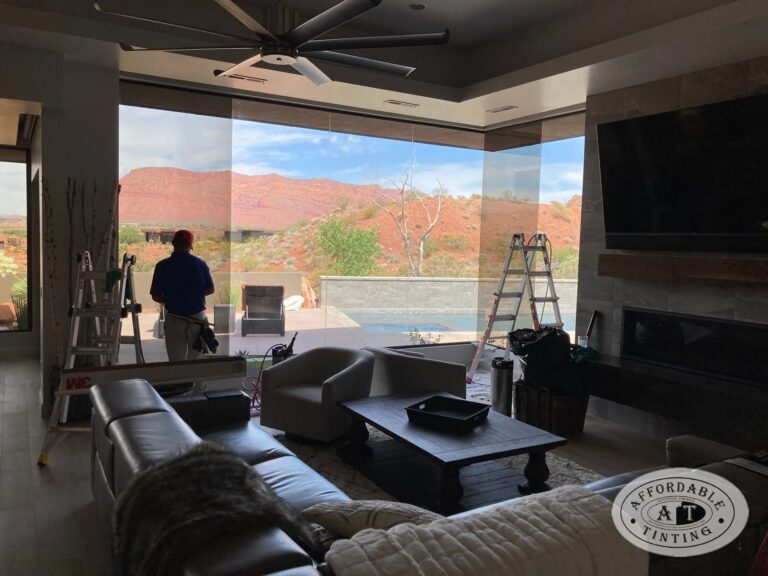
Windows are one of the biggest sources of unwanted heat gain in a home, more than most people realize. Untreated glass, especially on west- and south-facing walls, lets solar heat pour directly into your living space all afternoon. That’s a familiar problem throughout St. George, Hurricane, Washington, and the rest of Washington County, where homes routinely face over 300 sunny days a year and summer highs that regularly top 100°F. Your air conditioner ends up fighting the sun as much as it’s cooling the room.
How Window Film Actually Reduces Heat
Professional window film works by rejecting solar energy before it ever becomes heat inside your home. A thin, optically clear layer applied directly to your existing glass blocks up to 99% of harmful UV rays and a significant share of solar infrared heat, without noticeably darkening the room or changing how your windows look from the street. Because the heat never gets in, your air conditioner has less work to do to keep up, especially during peak afternoon hours.
What Actually Affects the Cost (and the Payback)
There’s no single price that applies to every home, and we’d rather give you an honest number than a made-up one. What affects cost is straightforward: how many windows you’re treating, how large they are, which film you choose, and whether it’s a residential or commercial project. A single west-facing great room is a very different job than tinting an entire two-story home. The best way to know what it actually costs, and what kind of payback to expect, is a free on-site quote, we’ll walk your property, look at your specific windows and sun exposure, and give you a real number before any work begins.
It’s Not Just About the AC Bill
Lower cooling costs are usually the reason people first call, but they’re rarely the only benefit homeowners notice. Blocking UV rays also protects flooring, furniture, artwork, and window treatments from fading, damage that adds up over years of Southern Utah sun. Film cuts glare on TVs, monitors, and screens. Privacy and decorative films add daytime privacy without blocking natural light. And safety and security films add a protective layer that helps hold glass together on impact, all without the dramatic look of dark, mirrored tint.
Is It Worth It in Southern Utah Specifically?
Southern Utah’s combination of high elevation, intense UV, and a long, hot cooling season is exactly the climate where window film tends to pay off fastest. Homes here generally have more direct sun exposure, and for more months of the year, than homes in milder climates, which means both the comfort improvement and the interior-protection benefits are more noticeable, sooner.
Frequently Asked Questions
Does window tinting actually work, or is it just marketing?
It works because of basic physics, not hype. Solar control film reflects and absorbs a large share of incoming solar energy before it can heat the air inside your home. The effect is most noticeable on windows that get direct afternoon sun.
How soon will I notice a difference?
Most homeowners notice cooler rooms and less glare almost immediately after installation, not weeks later. Lower utility bills typically show up over your next billing cycle or two, since they depend on weather and usage.
Will window film make my home too dark?
Not with the products we install. Modern solar control films are built to cut heat and glare while preserving natural light, so your home stays bright without the greenhouse effect.
Does window tinting help in winter too, or just summer?
Standard solar control film is primarily built to reject heat, which is its main job during Southern Utah’s long cooling season. If you’re specifically looking for a film that also helps retain heat in winter, ask us about insulating film options. It’s a fast-moving part of the product line, so we’re happy to talk through what’s currently available for your home.
Curious what window tinting would actually cost for your home or business? Contact Affordable Tinting today for a free, no-obligation on-site quote. We’re an Authorized 3M Prestige Dealer, the only one in Southern Utah, and a BBB Accredited, veteran-owned business serving St. George, Hurricane, Washington, Cedar City, and the rest of Washington County.